As legend has it, in the 1830s, María Antonia Deolinda Correa lived in Argentina's San Juan province. Her husband, Bustos, was taken by force and drafted into the private army of Juan Facundo Quiroga, a regional gaucho warlord. Deolinda was so distraught that she set out on foot, with her newborn son in her arms, to follow her husband. After days of walking through the desert without food or water, she finally collapsed and died. Days later, passing mule drivers found her body; amazingly, her infant son was still alive and nursing at her breast. The men buried her, and having found the name Correa on a pendant she was wearing, labeled her tomb "Difunta Correa".
Years later, as her story spread, the locals began to think of her as a saint who had given her life for her child and people in need began to pray to her. When one man's prayers were miraculously answered, he built a small chapel to honor Deolinda. Shortly thereafter, someone brought an offering of water to this chapel, symbolizing the divine relief from thirst. Soon, small roadside shrines began to appear all over the country, some of them littered with hundreds of bottles of water brought either in supplication or in thanks. Deolinda Correa has become the unofficial regional patron saint of travelers, farmers, and all those whose lives or livelihoods depend on a precarious supply of water. The monument built on the site where Deolinda is said to have died is now a large sanctuary - a hilltop where 17 chapels, and numerous smaller shrines, pay her honor. Over half a million pilgrims visit this site in the small town of Vallecito each year.
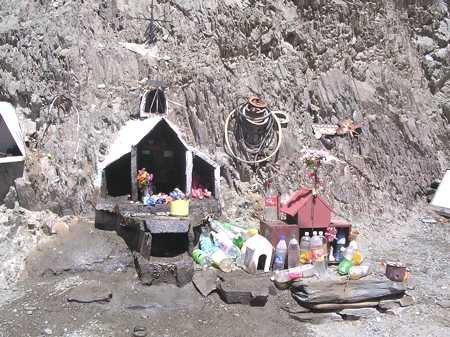
A typical roadside shrine
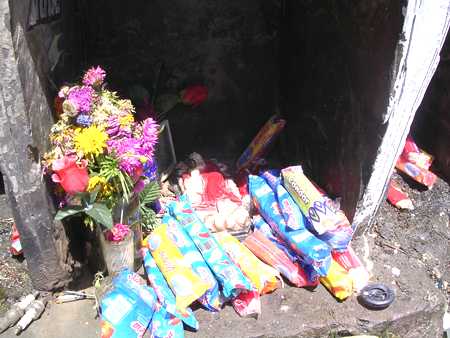
Offerings to the Defunta Correa
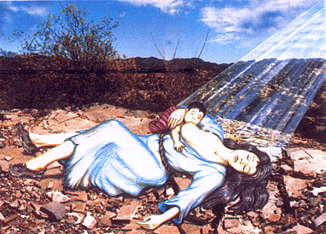
A popular picture from the Difunta Correa web site